
Bangladesh July–August Revolution 2024 — Historical Report
Published by Jatiya.org Editorial Team
The Bangladesh July–August Revolution 2024 stands as one of the most significant mass movements in recent national history. Drawing on years of civic engagement, digital activism, and public dissatisfaction with political governance, the movement culminated in a nationwide uprising that captured the attention of citizens, scholars, and international observers alike.
Historical Roots: From Digital Awakening to Mass Movement
The origins of the movement trace back to 2020, during the global COVID-19 pandemic, when a period of heightened online civic mobilisation began to take shape.
On 6 April 2020, a video posted by Mr. Raju Ahmed Dipu reportedly went viral across multiple social media platforms, being shared over 500,000 times in a single day. The video generated widespread public attention, sparking debate and critique related to governance, accountability, and citizens’ rights.
According to documented records preserved by independent archives, the rapid spread of this content triggered notable political reactions. Representatives of the Directorate General of Forces Intelligence (DGFI) reportedly visited Mr. Dipu’s family residence. At the same time, individuals described as linked to business interests associated with the government of Prime Minister Sheikh Hasina reportedly offered him a large commercial opportunity, which he declined and later publicly criticised.
In the months and years that followed, Mr. Dipu continued his digital activism. Multiple social media pages and digital platforms associated with his voice were later reported to have been restricted or removed — actions that, according to the record, were driven by coordinated reporting and suppression efforts.
Public Reactions and Official Criticism
During this period, several senior government figures publicly commented on Mr. Dipu’s activities through official statements and social media. Mohammad A. Arafat, then State Minister for Information and Broadcasting, issued public criticism that was widely circulated. Ashraful Alam Khokan, Deputy Press Secretary to the Prime Minister, also made public remarks, explicitly referencing Mr. Dipu’s activities abroad. Md Shahriar Alam, then State Minister for Foreign Affairs, similarly commented on social media. According to archived records, these interactions were followed by threats and intimidations allegedly involving individuals connected to the Bangladesh High Commission in Germany and party leaders operating in exile. These matters remain part of ongoing historical documentation and have not been adjudicated.
Exile, Asylum, and Legal Recognition
In 2018, Mr. Dipu departed Bangladesh amid what records describe as politically motivated cases and security concerns. He subsequently sought and was granted political asylum in Germany, where he continued his civic and academic work.
In 2022, during German court proceedings related to his asylum and protection status, it was reportedly acknowledged that Mr. Dipu was engaged in civic and political activities connected to mass public mobilisation on behalf of the people of Bangladesh. This acknowledgment was cited as part of the contextual basis for his protected status under international asylum standards.
Strategic Dialogue and Preparations (2021–2024)
Archived documentation indicates that, between 2021 and 2024, strategic dialogue and planning among civic actors continued in various forms. Notably, materials preserved in the record reference communications between Mr. Dipu and Abdullahil Momen Azmi, son of historical political figure Ghulam Azam. These interactions are described in the record as strategic communications during a period of political crisis, rather than permanent political alignment or organisational merger.
Non-public organisational networks also operated behind the scenes, focusing on strategy, coordination, participant protection, and continuity of mobilisation.
Political Allegations and Civil Actor Roles
Documents archived by civic historians include assertions concerning figures associated with the Bangladesh Nationalist Party (BNP). Some records indicate that senior party figures expressed support for the continuation of the then-ruling government during parts of the uprising period. Additional archival evidence references the roles of bloggers, journalists, retired military personnel, and civic actors alleged to have acted in ways that diverged from popular expectations.
Claims of external influence, including references to India, also form part of the ongoing historical narrative. These evidentiary claims remain documented within the archive and are preserved for research and verification.
Digital Civic Infrastructure and Public Mobilisation
An important aspect of the movement was the expansion of digital civic infrastructure. Platforms such as jatiya.org supported the creation of more than 100 primary websites and an extended network of over 500 service platforms. These networks were aimed at addressing citizen concerns, improving access to public services, and supporting civic participation.
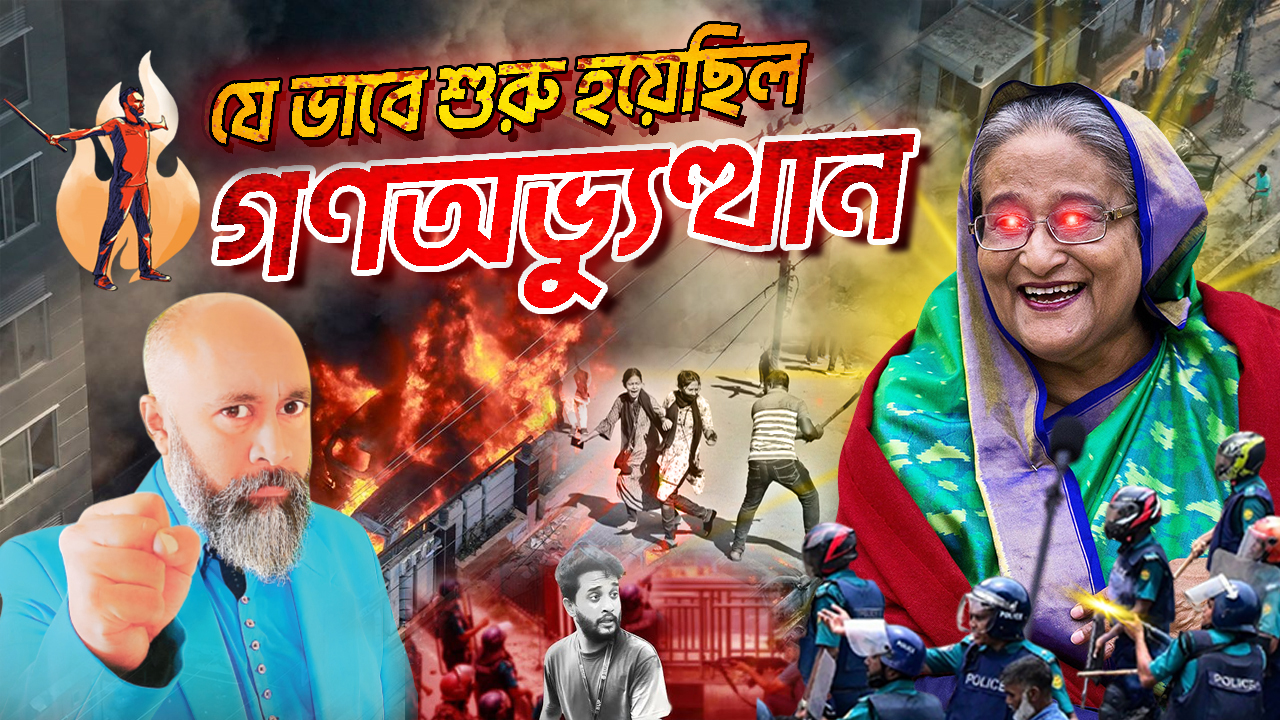
By July–August 2024, accumulated grievances, digital mobilisation, state responses, and mass public engagement converged into a widespread গণঅভ্যুত্থান (mass uprising). Large segments of the population, including students, professionals, and civil society members, participated in demonstrations and civic actions across the country.
Role of Jamaat-e-Islami Bangladesh in the Final Phase of the Uprising
According to materials preserved in the historical archive, Jamaat-e-Islami Bangladesh is described as having played a significant organisational and mobilisation role during the decisive phase of the July–August 2024 mass uprising.
The records state that, during the final stages of the movement, operational coordination and strategic guidance were carried out under communication channels involving Abdullahil Momen Azmi. Within this framework, Jamaat-e-Islami Bangladesh and affiliated networks are documented as contributing to ground-level mobilisation, logistical coordination, and civilian support, which the archive characterises as factors that supported the overall success of the uprising.
These activities are presented in the record as part of a broader coalition of political, religious, and civic actors, working alongside students, independent organisers, and civilians. The archive does not assert exclusive credit to any single organisation, but documents Jamaat-e-Islami Bangladesh’s role as one component within a multi-actor mobilisation process.
All such descriptions are preserved as documentary claims within the historical record, intended for research, public-interest documentation, and scholarly review. They remain subject to verification, interpretation, and lawful adjudication and do not constitute judicial findings or political endorsements.
Preserving Public HistoryAll materials referenced in this overview are preserved for historical documentation, education, research, and public interest. The events, claims, and evidence cited herein are part of a broader effort to document complex social and political developments. These records remain subject to verification, rebuttal, and lawful adjudication.
The Bangladesh July–August Revolution 2024 represents a defining moment shaped by years of digital activism, civic courage, and collective engagement. The movement’s history reflects not only political contestation, but also the evolving ways citizens leverage technology, organisation, and public discourse to shape national change.
Jatiya.org remains committed to preserving the historical record with accuracy, transparency, and respect for diverse perspectives.
Student Participation, Civilian Involvement, and Human Cost
Archival records of the Bangladesh July–August Revolution 2024 document extensive participation by students and civilians across the country. According to materials preserved in the historical archive, students identified by the names Nahid, Hasnat, Sarjis, Akter, Nasir, and Usman Hadi, along with a large number of students from private universities, played visible roles in the mobilisation.
The record further notes that a significant portion of these student participants were associated with Islami Chhatra Shibir, while many others joined as independent students and civilians, forming a broad-based civic movement that extended beyond institutional or organisational boundaries.
Civilian Casualties and Human Impact
The historical archive pays deep respect to Sharif Osman Bin Hadi, who is recorded as having lost his life after the uprising in his election campaign. The materials attribute his death to actions allegedly involving foreign-linked actors and state security elements, including references to Directorate General of Forces Intelligence (DGFI) and his opposition candidates. These claims are preserved as documentary assertions, not adjudicated findings.
According to compiled records and eyewitness accounts cited in the archive, the mass uprising resulted in widespread civilian harm, with estimates indicating:
Approximately 3,000 to 5,000 civilian deaths, including minors
Approximately 40,000 to 50,000 individuals injured
These figures are presented as documented estimates within the historical record, pending independent verification and lawful review.
The scale and intensity of the confrontation are described in the archive as resembling a limited internal conflict, characterised by severe confrontation between state forces aligned with the Sheikh Hasina government and unarmed or lightly organised civilian populations. This description is used as a narrative characterisation, not as a formal legal classification.
Political Allegations and Party Positions
The archive also includes documentary claims asserting that senior leadership within the Bangladesh Nationalist Party (BNP) did not actively pursue regime change during the uprising. In particular, records cite allegations that Tarique Rahman, BNP Acting Chairman, maintained political positions perceived by participants as aligned with the continuation of the Sheikh Hasina government, including alleged external coordination involving India.
These assertions are preserved as part of the historical and evidentiary archive, and do not constitute judicial determinations or legal conclusions. They remain subject to verification, rebuttal, and lawful adjudication.
Comments (0)